The short answer
Small UPI payments break budgets not because each one is expensive, but because none of them feels like a decision. A ₹30 chai, ₹60 auto, ₹150 snack and ₹199 delivery order don't trigger the pause a ₹5,000 purchase does. Across a month, they can quietly add up to a real chunk of your salary.
You fix it in two steps: see the true monthly total, then set one limit for it. You don't need to stop buying chai.
Why small payments are invisible
UPI removed the friction of paying. That's great, but friction used to do a job: counting notes from your wallet made you notice money leaving.
Now three things work against you:
- No physical signal. A tap and a PIN feel the same for ₹20 and ₹2,000.
- Frequency hides the total. Ten payments a day is normal. Nobody adds them up in their head.
- They're spread across categories. Some are "food", some "transport", some "shopping". No single category looks alarming.
The quick maths
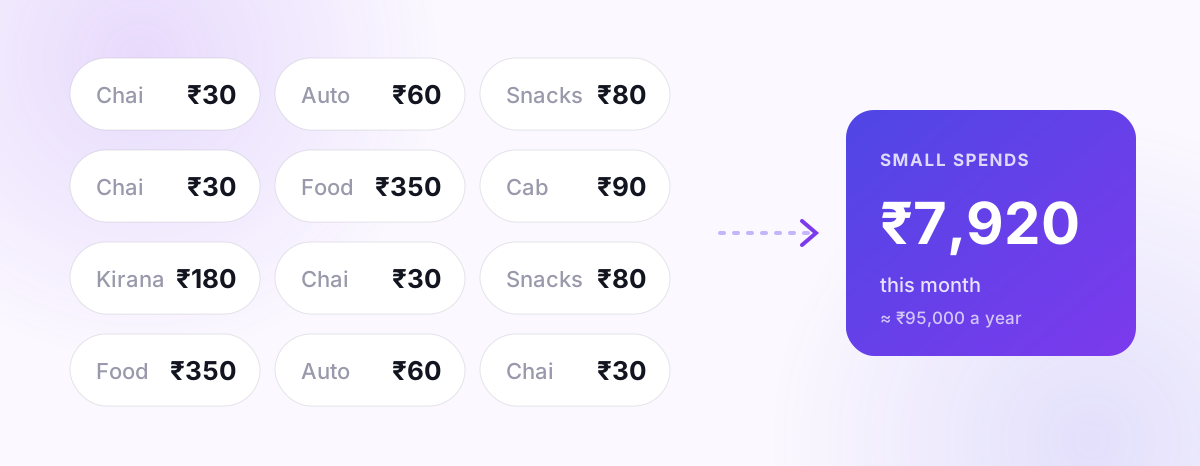
Here is an illustrative month for someone who doesn't think of themselves as a big spender:
| Habit | Per payment | How often | Per month (₹) |
|---|---|---|---|
| Chai / coffee | 30 | 2× a day, 22 workdays | 1,320 |
| Snacks | 80 | 4× a week | 1,280 |
| Autos / short cabs | 90 | 3× a week | 1,080 |
| Food delivery | 350 | 2× a week | 2,800 |
| Quick-commerce "just one thing" | 180 | 2× a week | 1,440 |
| Total | 7,920 |
Nearly ₹8,000 a month — around ₹95,000 a year — none of it from a single memorable purchase. Your own numbers will differ; the point is that you probably haven't added them up. The inflation calculator and SIP calculator are sobering ways to see what that money could become instead.
Step 1: See your real total
You can't manage a number you've never seen. Two ways to find it:
- Manual: export last month's statement and add up every debit under ₹500. It takes an evening.
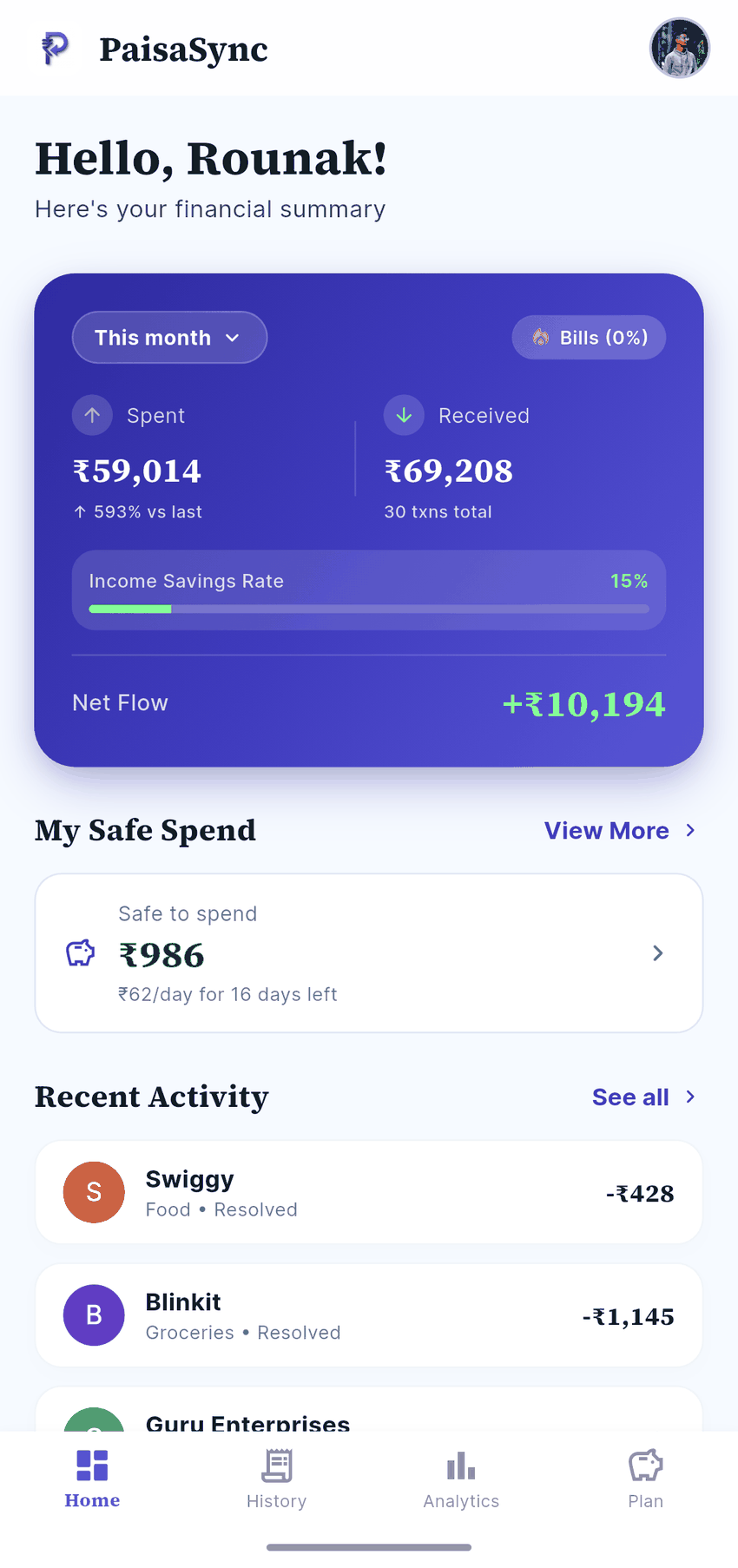
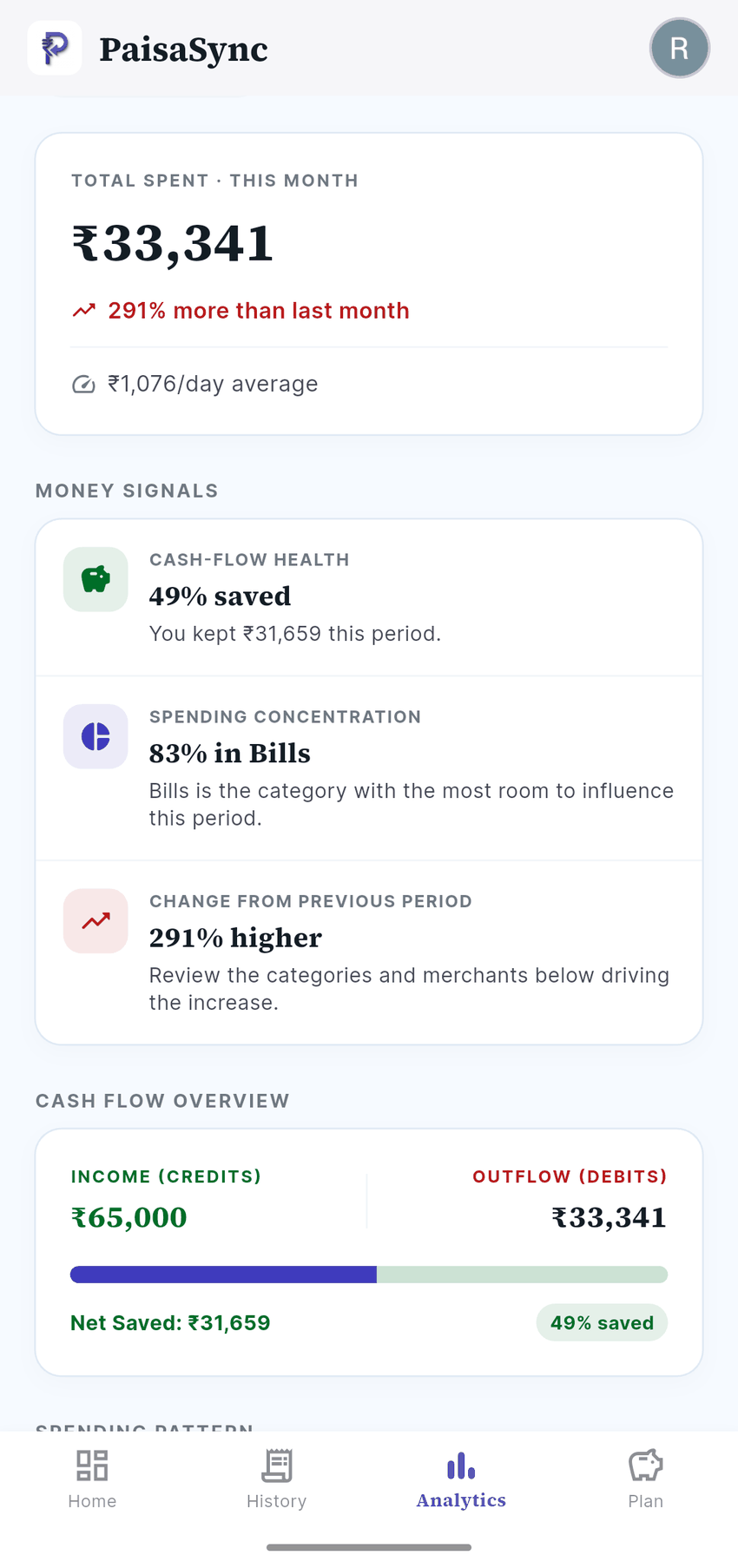
- Automatic: let an SMS-based tracker build it for you. PaisaSync reads the bank and UPI alerts on your phone and categorises each payment as it happens, so the monthly total — and which merchants make it up — is already there.
Step 2: Set one "small spends" limit
Don't ban anything. Instead, take your real total and cut it by around 20–30% as a starting limit. If you spent ₹7,900, try ₹6,000. That's a saving of close to ₹2,000 a month without changing your life.
Put that limit into a category budget so you see it every time you check your spending. Watching a number approach its limit changes behaviour far more than good intentions do.
Step 3: Target the biggest one, not all of them
Usually one habit is responsible for most of the total — often food delivery or quick-commerce. A few tactics that work:
- Remove card and UPI autofill from the delivery app, so each order takes a few extra seconds.
- Set a weekly delivery count, not a ban: "twice a week" is sustainable, "never" isn't.
- Batch quick-commerce orders into one planned weekly shop.
- Carry a flask a few days a week if chai runs are a daily habit.
Step 4: Check it daily for one month
A daily number beats a monthly budget for small spends, because the damage happens daily. PaisaSync's Safe-to-Spend figure tells you what you can spend today and still finish the month on plan — a much easier question to act on at a tea stall than "how is my monthly budget doing?".
After one month, most people don't need to check as often. The awareness sticks.
What about UPI Lite?
UPI Lite is designed for exactly these small payments — and that creates a tracking gap. Because UPI Lite settles on-device, it often doesn't generate a per-transaction bank SMS, so SMS-based trackers can't see those individual payments. If you use it heavily, either add those payments manually or keep UPI Lite for a fixed weekly amount so you know the total. We explain the details in why trackers miss transactions.
Bottom line
Small UPI payments aren't the enemy. Invisible ones are. See the true total, set one limit about 25% below it, go after the single biggest habit, and check a daily number for a month.
PaisaSync does the counting automatically from your bank SMS — so the ₹200 payments finally show up as the ₹8,000 they really are.