The short answer
Most money resolutions fail because they start with rules ("₹5,000 a month on food, no exceptions") before you know how you actually spend. By the third week the rule feels arbitrary, and you quit.
A 30-day spending audit flips the order. For one month you change nothing and record everything. Then you look at the real numbers, find your three biggest leaks, and build a plan around them. Plans built on your own data are the ones that survive past February.
Before you start (10 minutes)
- Pick your start date. 1 January is fine, but your salary day is better, because your month really starts when the money arrives.
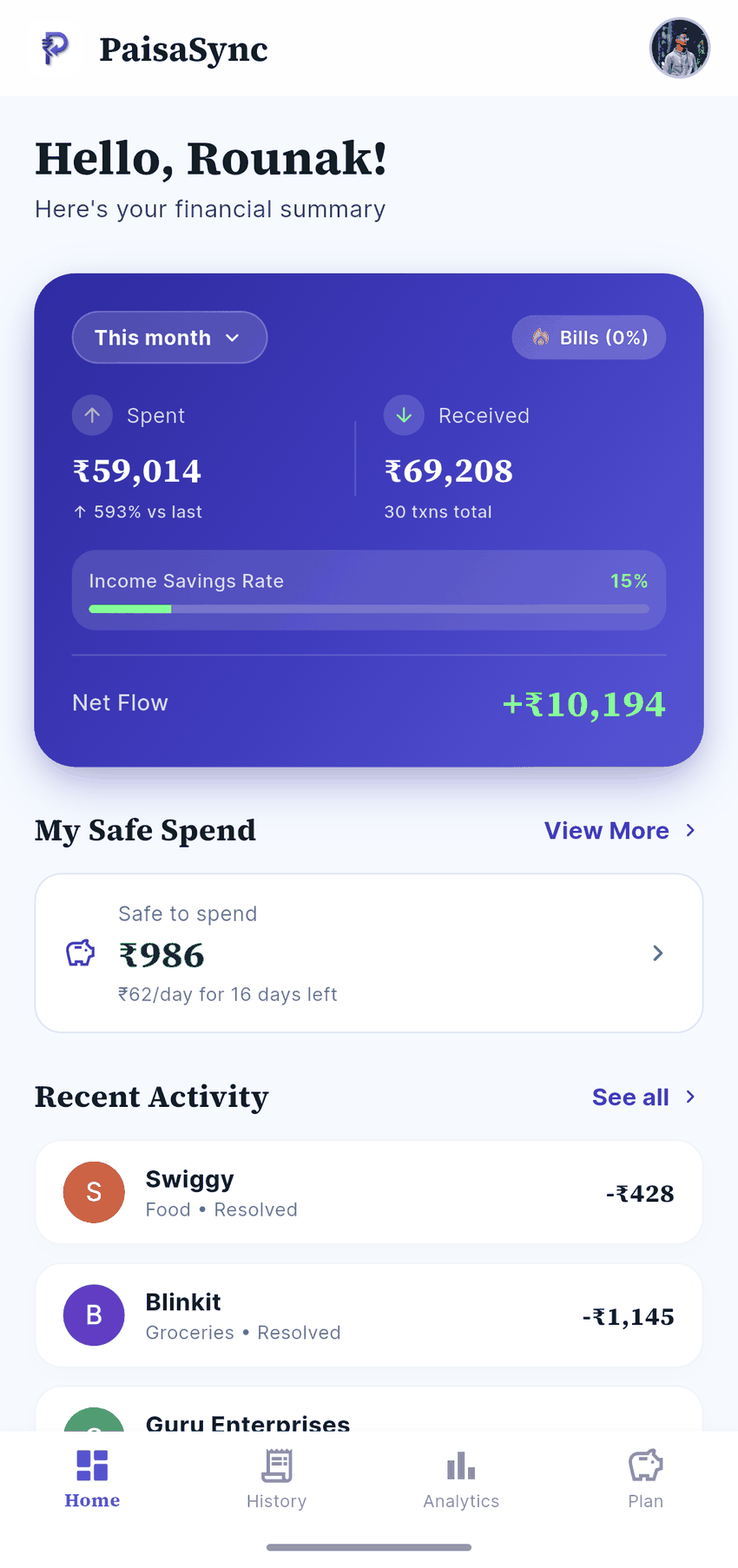
- Choose how you'll record. Writing every payment by hand works for about four days. An automatic tracker that reads bank and UPI messages records everything without effort, which is why this works in PaisaSync. Use whatever you'll actually stick with.
- Decide on cash. Note cash withdrawals as "cash" and don't try to split them. Close enough is fine.
- Make one promise: for these 30 days you won't judge or restrict. You're observing, not dieting.
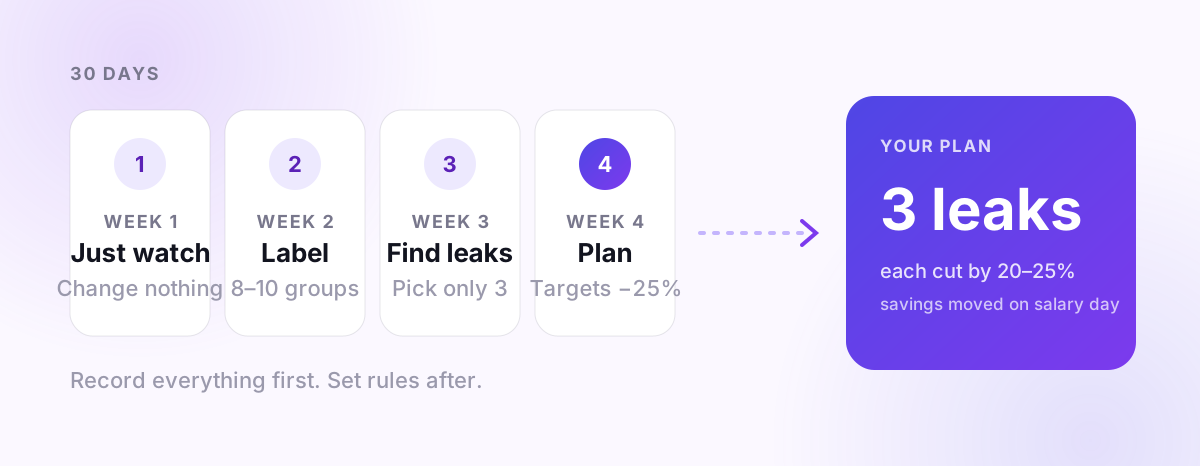
Week 1: Just watch
Spend normally. Once a day, glance at what was recorded. Don't analyse it yet.
What you're doing is noticing. Most people discover something in the first week: how many small UPI payments they make, how often they order food, or that one app quietly charges them every week.
Checkpoint: by day 7, is every payment being captured? Fix the gaps now (cash, a second bank account, a card) so the rest of the month is complete.
Week 2: Label and group
Make sure every transaction has a sensible category. Keep it to 8–10 groups at most:
| Group | Includes |
|---|---|
| Home | Rent, maintenance, electricity, broadband, gas |
| Food: groceries | Supermarket, kirana, quick-commerce groceries |
| Food: eating out | Restaurants, delivery, chai and snacks |
| Transport | Fuel, cabs, autos, metro, parking |
| Bills and subscriptions | Recharge, OTT, apps, memberships |
| Shopping | Clothes, electronics, home items |
| Health | Medicines, doctor, insurance |
| Family | Money sent home, children's expenses |
| Fun and travel | Movies, trips, hobbies |
| Loans and EMIs | EMIs, credit card bill payments |
Keep SIPs and savings out of spending, because they're investments. (See how to track SIPs without counting them as spending.)
Week 3: Find the three leaks
Now look at the totals so far and ask three questions:
- Which group is bigger than I expected? Usually eating out, quick-commerce or shopping.
- Which payments do I regret? Not the expensive ones, but the ones that didn't add anything.
- Which small payment repeats the most? The ₹150 that happens 20 times a month is ₹3,000. (We explain why in The ₹200 problem.)
Write down your top three leaks. Just three. Trying to fix ten things is how resolutions die.
Week 4: Build the plan from the data
With three weeks of real numbers, set one realistic target per leak, about 20–25% below what you actually spent, not 70%:
| Leak | Actual (30 days) | Target next month |
|---|---|---|
| Food delivery | ₹6,200 | ₹4,700 |
| Quick-commerce extras | ₹2,800 | ₹2,100 |
| Unused subscriptions | ₹750 | ₹0 (cancel two) |
Illustrative example.
Everything else stays as it is for now. Then automate the saving: move the expected difference (here roughly ₹2,950) to savings or a SIP on salary day, before you can spend it.
If you don't have a full monthly budget yet, our monthly budget guide with a ₹50,000 example is a good next step once the audit is done.
Day 30: Review and repeat
Spend 15 minutes on these four questions:
- What was my real monthly spending (excluding savings and investments)?
- How does it compare with my take-home salary?
- Did I hit any of my three targets in week 4?
- Which one habit do I want to keep next month?
Then start month two with the plan in place. You'll check less often from here on. The awareness from month one does most of the work.
Why this works when budgets don't
- No guessing. Targets come from your real spending, so they feel fair.
- Small scope. Three leaks are manageable; a full lifestyle overhaul isn't.
- Savings come first. The money moves on salary day, so willpower isn't needed at the checkout.
- It's repeatable. Do a short version every New Year, or after a big life change like a new job, a move or marriage.
How PaisaSync helps
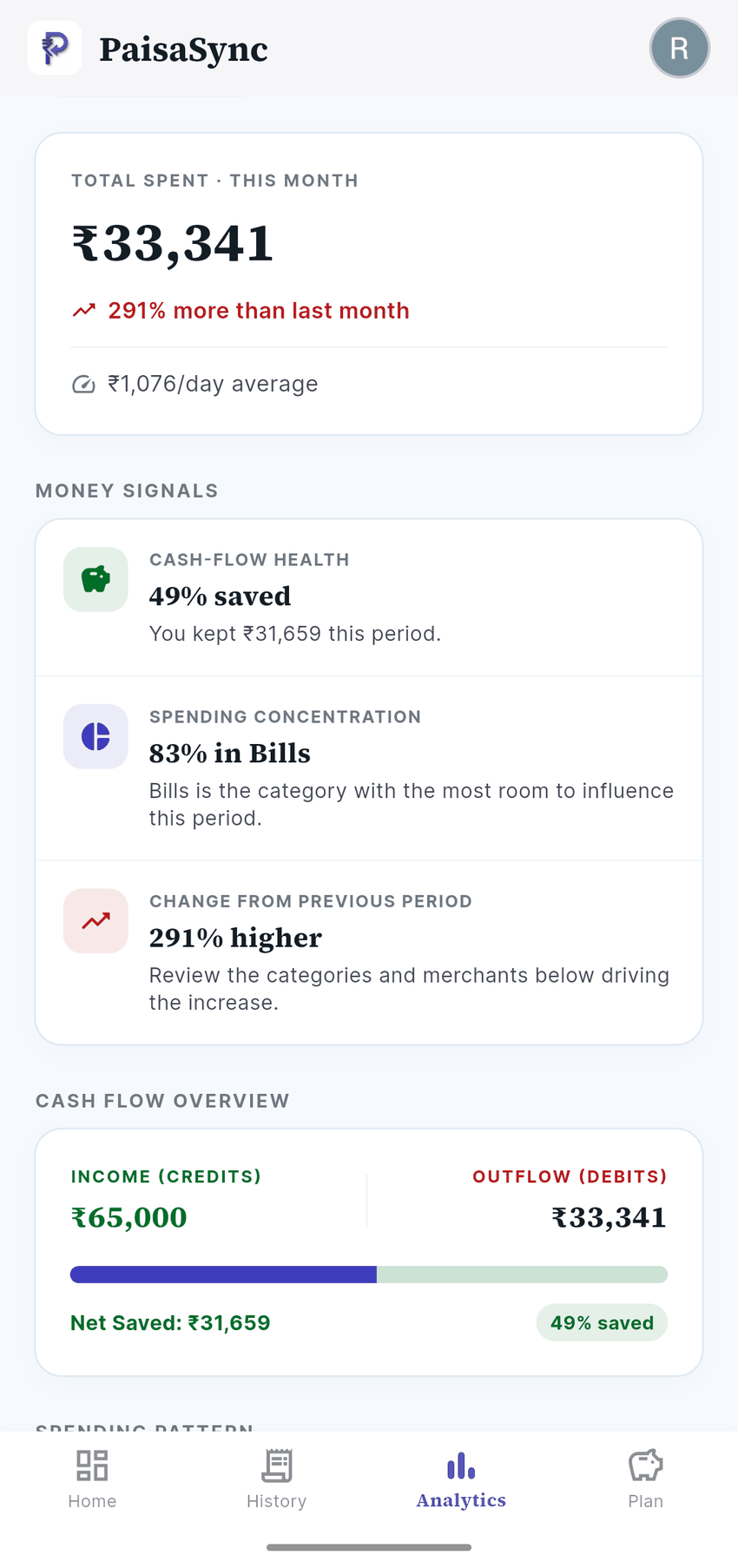
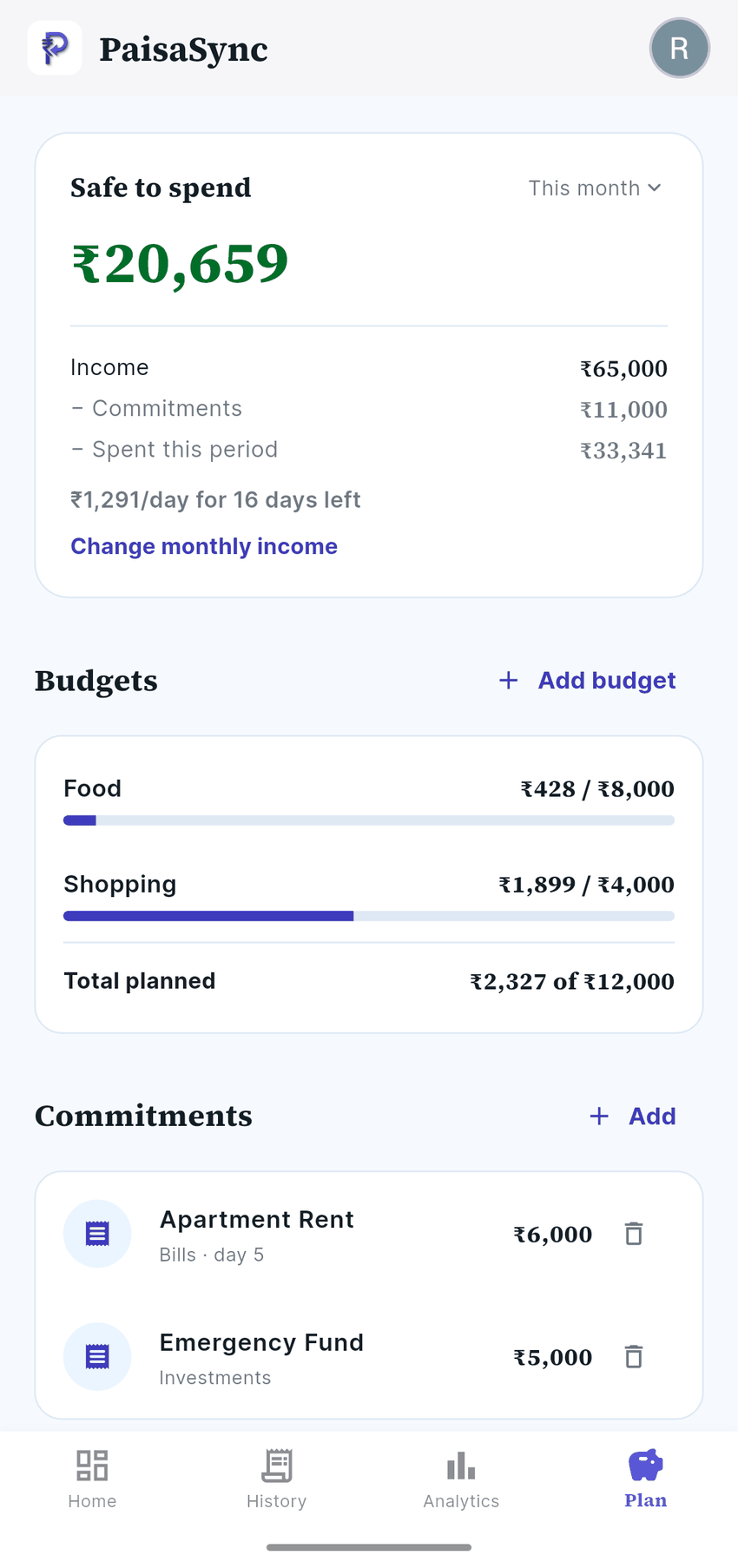
PaisaSync records every bank, card and UPI payment automatically from your bank messages, read only on your phone, so week 1 needs zero effort. The spending calendar shows heavy days at a glance, categories and Month Wrapped answer the week 3 questions, and Safe-to-Spend turns your new plan into a single daily number.
Bottom line
Don't start the year with rules. Start with 30 days of watching, find three leaks, set targets 20–25% below reality, and move the savings on salary day.
Start your audit on your next payday with PaisaSync. It does the recording, so you only have to do the noticing.