The short answer
An emergency fund is money set aside only for genuine surprises: a job loss, a medical bill, an urgent family need, a major repair. For most salaried people in India, a good target is 3 to 6 months of essential expenses, and more if your income is uncertain or others depend on you.
Keep it safe and quick to access, for example split between a savings account or sweep FD and a liquid fund. Build it in small monthly amounts alongside your SIPs rather than instead of them.
Step 1: Work out your essential monthly expenses
The fund is sized on what you must pay each month, not on your full lifestyle. Include:
- rent or home loan EMI
- other EMIs (car, personal loan, education)
- groceries and basic household costs
- electricity, gas, water, phone and broadband
- insurance premiums (monthly equivalent)
- school fees and childcare
- money you send to parents or family
- transport to work and essential travel
Leave out eating out, shopping, holidays and subscriptions you would cancel in a crisis.
Use your real numbers, not a guess. Three months of actual spending is the best source. If you've done a 30-day spending audit, you already have it.
Step 2: Choose how many months
| Your situation | Suggested months of essentials |
|---|---|
| Stable salaried job, single, no dependants | 3–4 |
| Salaried with a spouse who also earns | 3–6 |
| Single income, family depends on you | 6–9 |
| Freelancer, business owner, commission-based income | 9–12 |
| Job in a sector with frequent layoffs | add 2–3 months |
| Elderly parents without health insurance | add a separate medical buffer |
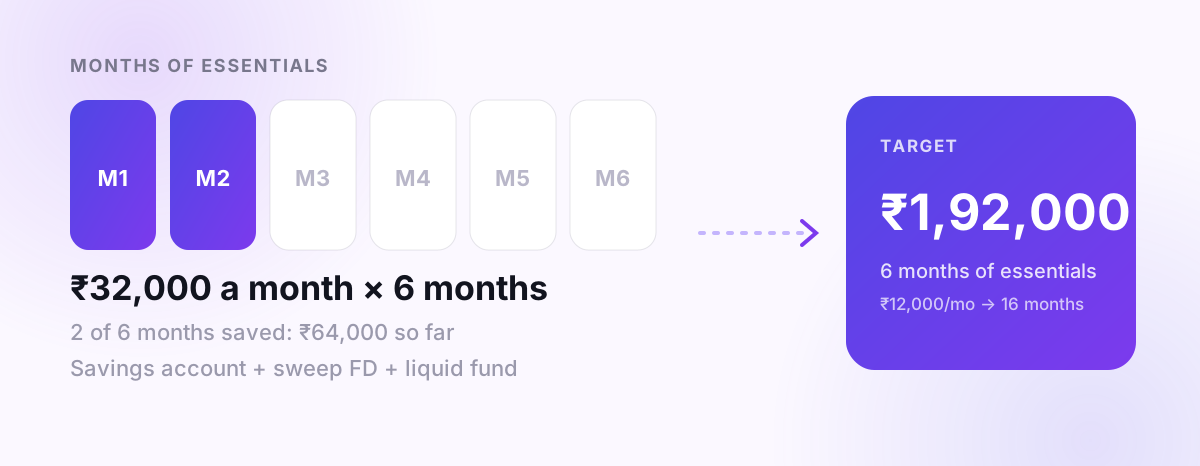
Example: essentials of ₹32,000 a month, single income with a family → 6 months → ₹1,92,000 target.
Step 3: Decide where to keep it
The fund has three jobs, in this order: be safe, be reachable within a day or two, and earn something. Returns come last.
| Option | Access | Notes |
|---|---|---|
| Savings account | Instant | Keep about one month here for immediate needs |
| Sweep-in / auto FD | Instant to 1 day | Earns FD-like interest; breaks automatically when you need it |
| Fixed deposit (no lock-in) | 1 day | Small penalty on premature withdrawal |
| Liquid mutual fund | Usually next working day | Low risk, not guaranteed; some offer instant partial redemption |
A simple setup that works for most people: 1 month in your savings account, the rest split between a sweep FD and a liquid fund.
What not to use: equity mutual funds or stocks (they can be down 20–30% exactly when you need the money), long lock-in products like PPF, NPS, ELSS or tax-saver FDs, and gold you'd have to sell in a hurry.
Step 4: Build it from your salary
₹1.9 lakh sounds like a lot. Broken into months, it's manageable:
| Monthly amount | Time to reach ₹1,92,000 |
|---|---|
| ₹8,000 | 24 months |
| ₹12,000 | 16 months |
| ₹16,000 | 12 months |
Ways to speed it up:
- Start with one month of essentials as your first milestone. It covers most real emergencies.
- Automate it on salary day, with a standing transfer to a separate account so you don't see it as spendable.
- Send windfalls straight in: bonuses, tax refunds, part of any increment.
- Use a leak you found. Cancelling two subscriptions and trimming food delivery by 25% can free ₹2,000–₹3,000 a month. (See the subscription audit.)
Emergency fund or SIP first?
Ideally both, in parallel: a smaller SIP plus a monthly emergency fund transfer. If you can only do one at the start, build one month of essentials first, then restart or raise your SIP. Without a buffer, the first emergency usually forces you to redeem investments at a bad time, or to borrow on a credit card at 36%+ interest.
What counts as an emergency?
Before you dip in, ask: is it unexpected, necessary, and urgent?
- ✅ Job loss, hospital bill, urgent travel for family, essential car or home repair
- ❌ A sale, a planned trip, a new phone, festival shopping (those need their own savings pot)
If you use the fund, refill it first before resuming extra spending or bigger investments.
Don't forget insurance
An emergency fund isn't a substitute for health insurance (one hospital stay can exceed a year of savings) or term life insurance if anyone depends on your income. Insurance handles the very large shocks. The fund handles everything else.
How PaisaSync helps
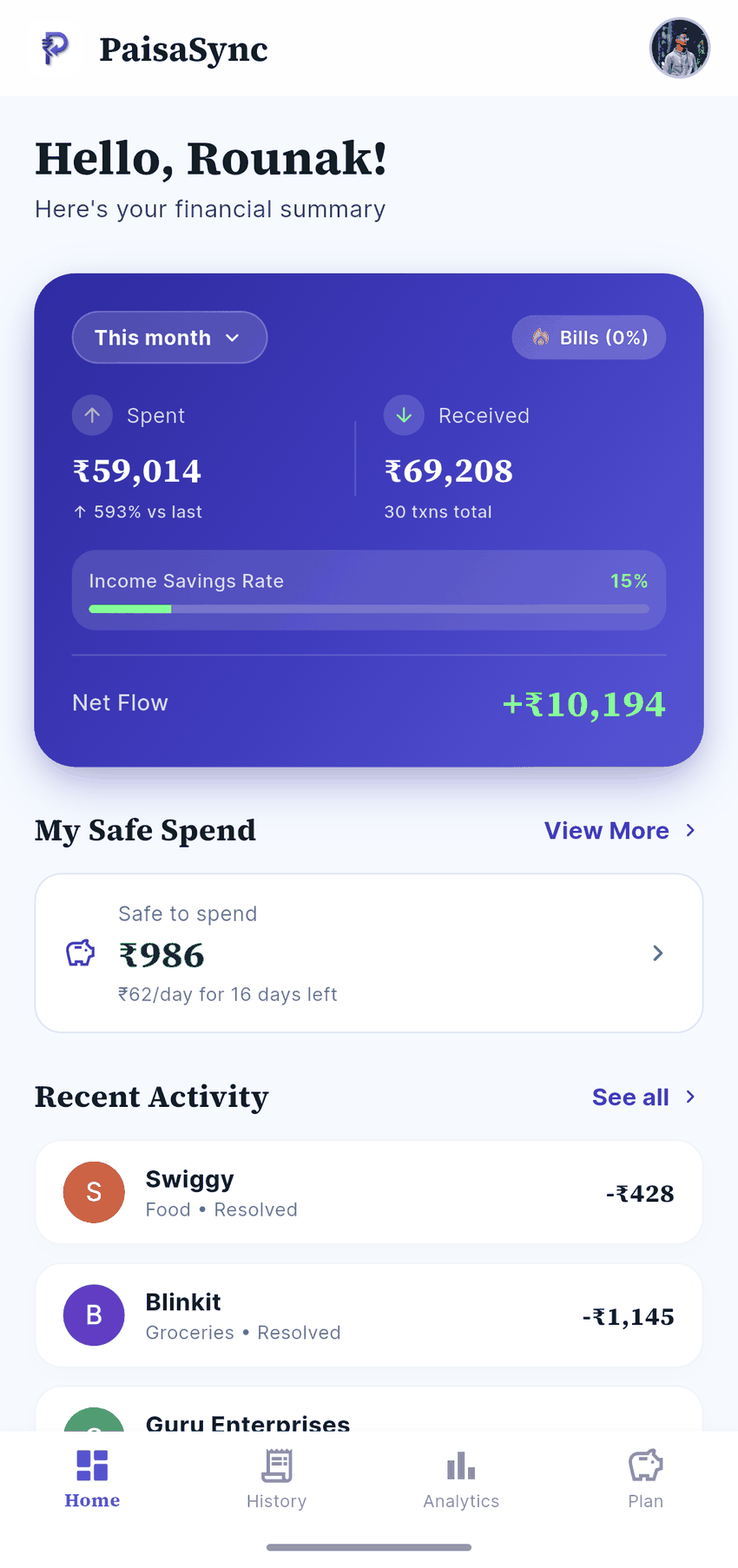
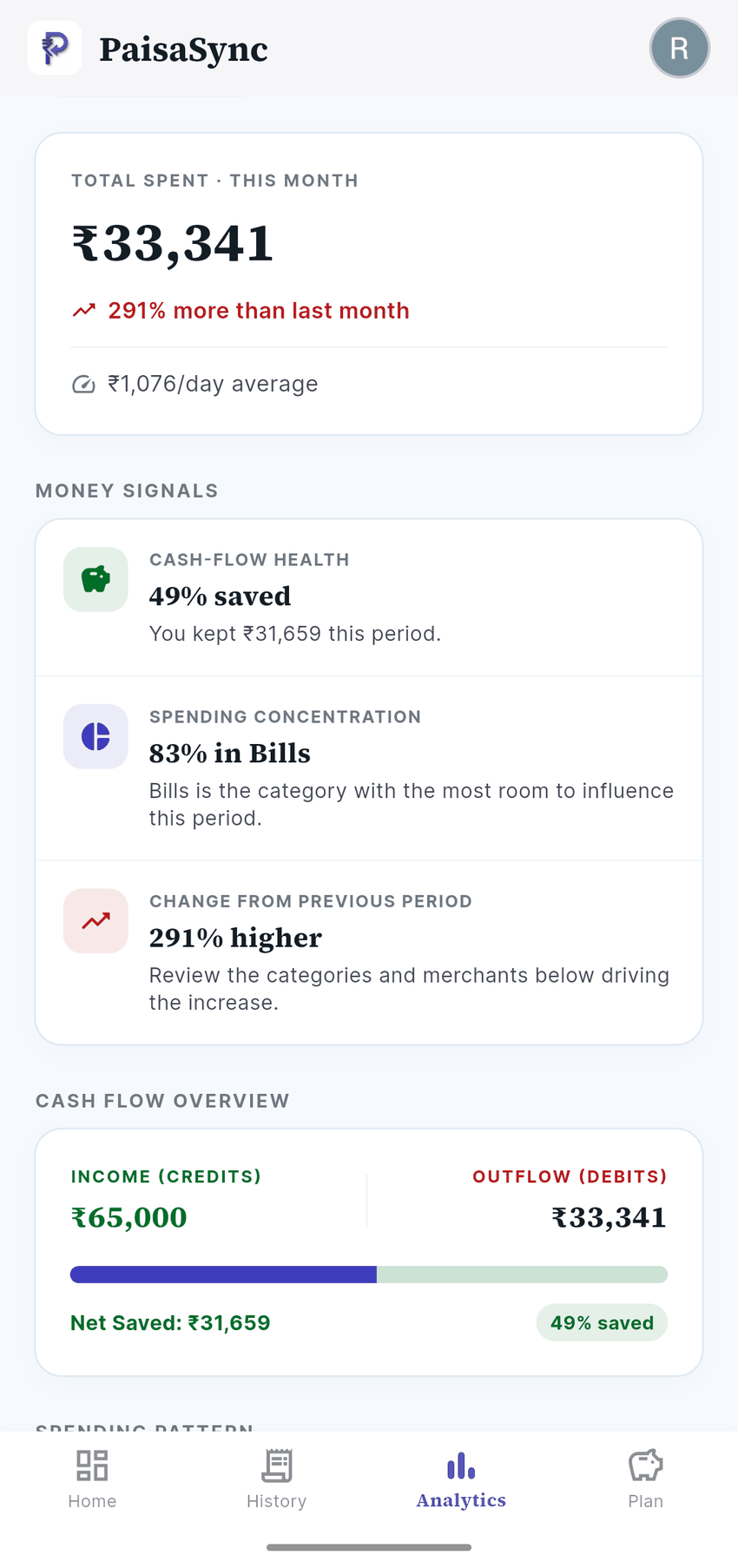
The hardest part of sizing an emergency fund is knowing your real essential expenses. PaisaSync builds that picture automatically from your bank and UPI messages, read only on your phone, with categories and monthly totals, so the number you plan around is the one you actually spend. Goals lets you track the fund as it grows toward your target.
Bottom line
Size the fund on essential monthly expenses, aim for 3–6 months (more if your income is uncertain or others rely on you), keep it safe and reachable, and build it automatically on salary day, starting with one month.
Find your real essential expenses with PaisaSync and set your target from facts, not guesses.